- English
- Español
- Português
- русский
- Français
- 日本語
- Deutsch
- tiếng Việt
- Italiano
- Nederlands
- ภาษาไทย
- Polski
- 한국어
- Svenska
- magyar
- Malay
- বাংলা ভাষার
- Dansk
- Suomi
- हिन्दी
- Pilipino
- Türkçe
- Gaeilge
- العربية
- Indonesia
- Norsk
- تمل
- český
- ελληνικά
- український
- Javanese
- فارسی
- தமிழ்
- తెలుగు
- नेपाली
- Burmese
- български
- ລາວ
- Latine
- Қазақша
- Euskal
- Azərbaycan
- Slovenský jazyk
- Македонски
- Lietuvos
- Eesti Keel
- Română
- Slovenski
- मराठी
- Srpski језик

How Can a KP-N Film Blowing Machine with Online Printer Improve Your Plastic Film Production Efficiency
In today's competitive plastic packaging industry, manufacturers need production equipment that combines efficiency, flexibility, and cost control. Kingplast, a professional manufacturer of plastic film processing machinery, has developed the KP-N Film Blowing Machine with Online Printer to integrate film extrusion and basic logo printing into one streamlined production process. This innovative solution helps plastic film manufacturers reduce equipment investment, simplify operations, and produce customized packaging films with greater convenience.
For businesses producing polyethylene films for shopping bags, packaging materials, and industrial applications, choosing an integrated film blowing and printing solution can improve workflow efficiency while reducing the need for separate processing equipment. Understanding its working principles, technical specifications, and configuration options is essential when selecting the right machinery for long-term production.
The KP-N Film Blowing Machine with Online Printer is an integrated plastic film production solution designed to manufacture HDPE, LDPE, and LLDPE films while providing an additional online one-color printing function. By combining extrusion, film forming, winding, and simple logo printing, the machine offers manufacturers a practical way to streamline production and reduce operational costs. With multiple model configurations, optional auxiliary equipment, and straightforward operation, it is suitable for small and medium-sized plastic packaging manufacturers seeking an economical production solution.
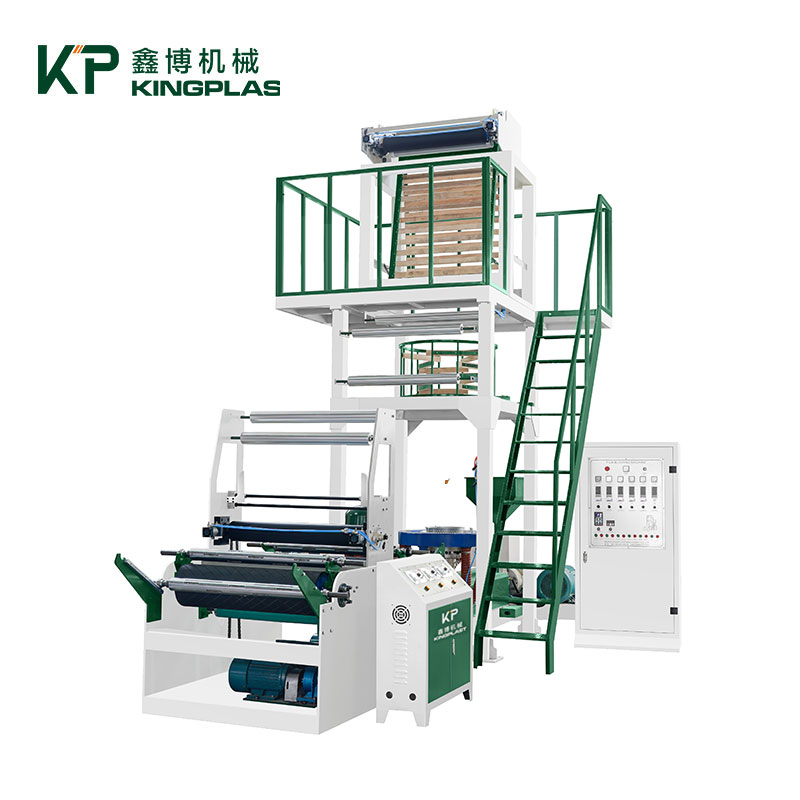
Table of Contents
1. What Is a KP-N Film Blowing Machine with Online Printer?
2. How Does the Integrated Film Blowing and Printing Process Work?
3. Key Features and Advantages of the KP-N Machine
4. Main Components and Their Functions
5. Technical Specifications and Model Comparison
6. Optional Equipment for Customized Production
7. Typical Applications in Plastic Packaging Manufacturing
8. How to Choose the Right Film Blowing Machine
9. Manufacturing Quality and Engineering Assurance
10. Frequently Asked Questions
1. What Is a KP-N Film Blowing Machine with Online Printer?
A KP-N Film Blowing Machine with Online Printer is a polyethylene film extrusion system equipped with an integrated one-color printing unit. Unlike conventional film blowing equipment that only produces plastic film rolls, this machine adds a printing function directly to the production line, allowing manufacturers to print simple logos or other basic graphic information during film production.
The equipment developed by Kingplast is designed primarily for HDPE, LDPE, and LLDPE materials. These polyethylene resins are widely used in flexible packaging because of their processing versatility, moisture resistance, and suitability for different packaging applications.
The integrated design offers several practical advantages:
- Combined production: Film extrusion and basic printing are completed within one production workflow.
- Reduced equipment investment: Manufacturers can avoid purchasing a completely independent printing line for simple printing requirements.
- Improved production convenience: Operators can coordinate film production and printing through an integrated setup.
- Flexible model selection: Multiple extruder sizes support different film widths and production requirements.
- Practical operation: A straightforward control system helps operators learn the production process efficiently.
For companies that manufacture printed plastic bags or packaging film with simple branding requirements, this integrated machine provides a practical alternative to a more complicated production arrangement.
2. How Does the Integrated Film Blowing and Printing Process Work?
Understanding the working process helps manufacturers evaluate how the machine fits into their existing production operations. The KP-N system combines several manufacturing stages into a coordinated workflow.
Step 1: Plastic Material Feeding and Melting
Polyethylene raw materials, including HDPE, LDPE, or LLDPE pellets, are introduced into the extruder. The rotating screw transports, compresses, and melts the material through controlled heating and mechanical shear.
The screw and barrel are important components because their design influences material conveying, melting consistency, and extrusion stability.
Step 2: Melt Extrusion and Film Bubble Formation
The molten plastic passes through the die head, where it is formed into a continuous tubular film. Compressed air is introduced to inflate the tube into a bubble. The air ring helps cool the film and maintain stable bubble formation.
Proper temperature control, extrusion output, and cooling conditions are important for achieving consistent film thickness and surface quality.
Step 3: Film Cooling and Take-Up
After cooling, the film bubble moves through the take-up unit. The rollers guide the film upward and help maintain stable movement during production. Appropriate take-up speed is important for controlling film dimensions and coordinating the overall production process.
Step 4: Online One-Color Printing
The integrated printing unit allows manufacturers to apply simple logos or identification graphics to the film during production. This eliminates the need to transfer every film roll to a separate printing machine when the required printing work is relatively simple.
Printing requirements should be discussed before ordering, including artwork dimensions, ink compatibility, printing position, and production speed synchronization.
Step 5: Film Winding
The finished film passes through the winding unit and is collected into rolls. Stable winding tension and appropriate speed adjustment help produce neatly wound rolls that are easier to store, transport, and process in subsequent bag-making operations.
This integrated process helps manufacturers simplify production management while reducing unnecessary material handling between different machines.
3. Key Features and Advantages of the KP-N Machine
When evaluating a film blowing machine with an online printer, manufacturers should consider more than its basic extrusion capability. Production cost, operational simplicity, equipment flexibility, and printing requirements all influence the actual value of the investment.
3.1 Integrated Printing for Lower Production Costs
One of the main advantages of the KP-N design is its integrated one-color printing function. For manufacturers that only require simple logos or basic identification graphics, an online printing configuration can reduce the need for additional independent printing equipment.
It can also simplify material transfer and production scheduling, helping businesses manage their manufacturing workflow more efficiently.
3.2 Compatibility with Multiple Polyethylene Materials
The machine is designed to process three commonly used polyethylene materials:
- HDPE: High-density polyethylene is commonly used for lightweight shopping bags and packaging films requiring stiffness.
- LDPE: Low-density polyethylene offers flexibility and is suitable for various flexible packaging applications.
- LLDPE: Linear low-density polyethylene provides useful toughness and puncture resistance for demanding film applications.
Material selection should be based on the required film properties, product application, and processing conditions.
3.3 Straightforward Operation and Control
The KP-N machine features a practical operating panel and control arrangement. Temperature controllers and inverters allow operators to manage important production parameters, including heating conditions and motor speeds.
This relatively straightforward operating structure can be particularly useful for manufacturers entering the plastic film production industry or upgrading from basic extrusion equipment.
3.4 Flexible Production Configurations
Different models are available to accommodate different film widths and extrusion output requirements. Manufacturers can select a suitable configuration according to their production volume, material characteristics, and finished film specifications.
3.5 Responsive Technical Support
Kingplast states that its customer service team responds to customer requests within 24 hours. Timely communication is valuable when manufacturers need assistance with equipment configuration, technical questions, installation preparation, or after-sales service arrangements.
4. Main Components and Their Functions
The performance of a plastic film extrusion line depends on the coordination of its mechanical, electrical, and auxiliary systems. The KP-N film blowing equipment consists of several major assemblies.
| Component | Main Function | Manufacturing Importance |
|---|---|---|
| Extruder | Melts and conveys polyethylene raw materials. | Influences extrusion stability and material processing. |
| Screw and Barrel | Transport, compress, and plasticize raw materials. | Contribute to consistent melting and extrusion performance. |
| Die Head | Shapes molten plastic into tubular film. | Influences film dimensions and forming stability. |
| Air Ring and Blower | Provide cooling air for the film bubble. | Support cooling efficiency and bubble stability. |
| Take-Up Unit | Guides and pulls the formed film upward. | Helps maintain stable film movement and production speed. |
| Online Printer | Prints simple logos or graphics during film production. | Combines basic branding with the extrusion process. |
| Winding Unit | Collects finished film into rolls. | Supports consistent roll formation and downstream handling. |
| Electrical Control Box | Controls temperature and motor operation. | Helps operators manage important operating parameters. |
Extrusion and Mechanical Systems
The extruder includes the screw, barrel, main driving motor, and die head. Kingplast specifies a bimetallic screw and SACM-645/38CrMoAlA barrel material in its published machine specifications.
The take-up unit can be configured with different roller arrangements, including rubber roller and steel roller combinations. The winding unit uses a surface-friction winding arrangement, with speed adjustment through a torque meter or inverter according to the selected configuration.
Electrical Control System
The electrical box contains important control components, including temperature controllers, inverters for the main motor and take-up system, an ammeter, and a voltmeter. These components help operators monitor and adjust machine operating conditions.
5. Technical Specifications and Model Comparison
Kingplast offers several KP-N model configurations to accommodate different film production requirements. The main model selection factors include screw diameter, film width, extrusion capacity, and take-up speed.
The following table summarizes the published specifications for the five standard models.
| Specification | KP-N45 | KP-N50 | KP-N55 | KP-N60 | KP-N65 |
|---|---|---|---|---|---|
| Screw Diameter (mm) | 45 | 50 | 55 | 60 | 65 |
| Film Width (mm) | 100-500 | 300-600 | 400-800 | 500-1000 | 600-1200 |
| HD Extrusion Output (kg/h) | 35 | 40 | 50 | 55 | 65 |
| LD Extrusion Output (kg/h) | 40 | 45 | 60 | 70 | 80 |
| Main Motor Power (kW) | 11 | 15 | 18.5 | 22 | 30 |
| Take-Up Speed (m/min) | 10-100 | 10-100 | 10-80 | 10-80 | 10-80 |
| Take-Up Motor (kW) | 0.75 | 1.5 | 1.5 | 1.5 | 2.2 |
| Winding Speed (m/min) | 10-100 | 10-100 | 10-80 | 10-80 | 10-80 |
Important specification notes:
- Suitable materials include HDPE, LDPE, and LLDPE.
- Published HDPE film thickness ranges include 0.009-0.05 mm and 0.009-0.15 mm configurations.
- Published LDPE film thickness ranges include 0.02-0.15 mm and 0.03-0.15 mm configurations.
- The extruder screw L/D ratio is available in 30:1 or 32:1 configurations.
- Cooling blower power varies by model, from 2.2 kW to 5.5 kW.
Actual output depends on resin characteristics, film thickness, operating conditions, and equipment configuration. Buyers should confirm the applicable technical specifications with Kingplast before placing an order.
6. Optional Equipment for Customized Production
Different manufacturers have different production targets. To accommodate changing requirements, Kingplast offers several optional configurations for its film blowing equipment.
Auto-Loader
An automatic loader helps transfer plastic raw materials into the extruder, reducing manual feeding work and supporting a more continuous material supply process.
Corona Treater
A corona treatment unit improves the surface energy of plastic film, helping printing inks and other surface-applied materials achieve better adhesion. It can be particularly useful when the film requires additional printing or surface treatment operations.
Rotary Die Head
A rotary die head can help improve film bubble rotation and support more uniform film properties in suitable production configurations. Its suitability should be evaluated according to the film application and production requirements.
Double Winder
A double winder allows film winding arrangements to be adapted to specific production needs. It can provide additional flexibility for manufacturers handling different roll formats or downstream processing requirements.
High-Speed Screen Changer
A high-speed screen changer helps facilitate screen replacement during extrusion. It is useful for manufacturers seeking more convenient filtration maintenance and improved production continuity.
When selecting optional equipment, manufacturers should consider the complete production workflow instead of focusing on individual accessories. Proper configuration helps balance investment cost, production efficiency, and finished film requirements.
7. Typical Applications in Plastic Packaging Manufacturing
The versatility of HDPE, LDPE, and LLDPE film makes the KP-N machine suitable for various flexible packaging production environments.
Shopping Bag Production
Polyethylene film is widely used to manufacture shopping bags and retail packaging. The integrated printing function can support simple brand logos or identification graphics before the film is transferred to downstream bag-making equipment.
Industrial Packaging Film
Manufacturers can use polyethylene film for wrapping, protective packaging, and general industrial applications. Appropriate resin selection and film thickness help determine the mechanical properties required for different products.
Food and Daily Necessity Packaging
LDPE and LLDPE films are commonly used in flexible packaging applications involving household products, daily necessities, and certain food packaging formats. The specific application must comply with relevant material and food-contact regulations.
Customized Printed Plastic Film
For businesses requiring simple logos or basic printed information, online printing can help simplify the manufacturing process. It is especially relevant for companies that do not require complex multicolor graphics or advanced printing effects.
8. How to Choose the Right Film Blowing Machine
Selecting the appropriate film blowing machine requires a clear understanding of production targets. Buyers should evaluate the following factors before making an investment.
8.1 Define Your Required Film Width
Film width is one of the most important selection criteria. A machine with insufficient width capacity cannot meet the intended product specifications, while excessive capacity may increase unnecessary investment and operating costs.
For example, the KP-N45 supports a published film width range of 100-500 mm, whereas the KP-N65 supports 600-1200 mm. Buyers should compare these ranges with their actual product dimensions.
8.2 Evaluate Extrusion Output
Production capacity should match the expected order volume. A higher extrusion output can support larger production targets, but it should also be considered alongside film thickness, material type, cooling conditions, and downstream processing capacity.
8.3 Confirm Material Compatibility
Although the KP-N series is designed for HDPE, LDPE, and LLDPE, manufacturers should discuss their actual resin grades and formulations with the supplier. Different materials may require adjustments to temperature, screw speed, and processing conditions.
8.4 Determine Printing Requirements
The integrated one-color printer is designed for simple logo printing. If your products require complex artwork, multiple colors, photographic graphics, or advanced printing effects, a separate flexographic or gravure printing solution may be more appropriate.
8.5 Consider Future Production Expansion
Manufacturers should also evaluate potential future requirements, such as higher output, automatic feeding, additional winding capacity, and improved surface treatment. Selecting a machine with suitable expansion options can help reduce future equipment replacement costs.
Before purchasing, prepare the following information:
- Required film material and resin specifications.
- Target film width and thickness.
- Expected hourly or daily production output.
- Printing color and logo requirements.
- Required winding roll dimensions.
- Available factory space and electrical supply.
- Optional equipment and automation preferences.
- Installation, training, and after-sales service requirements.
9. Manufacturing Quality and Engineering Assurance
Investing in a film blowing machine is a long-term manufacturing decision. Equipment quality, component selection, technical communication, and supplier support all influence the stability of daily production.
When evaluating Kingplast or any other machinery supplier, buyers should pay attention to several important engineering considerations.
Mechanical Component Quality
The screw, barrel, die head, rollers, and transmission components should be selected according to the intended processing conditions. Suitable material selection and manufacturing precision help support stable operation and consistent film production.
Electrical System Reliability
Temperature controllers, motor inverters, electrical connections, and protective devices should be checked before equipment delivery. A well-organized electrical system makes operation and routine maintenance more manageable.
Production Testing and Acceptance
Before shipment, buyers should clarify equipment inspection and acceptance requirements. Recommended checks include:
- Mechanical assembly and component installation.
- Electrical wiring and control system operation.
- Heating and temperature control performance.
- Extrusion and film bubble stability.
- Take-up and winding operation.
- Online printing function and print positioning.
- Optional equipment compatibility.
Technical Communication and After-Sales Support
Clear communication is essential when ordering customized industrial machinery. Buyers should confirm the equipment configuration, production expectations, installation requirements, spare parts, and maintenance arrangements in advance.
Kingplast provides customer communication and technical support for its plastic film machinery products. According to the company, customer inquiries receive a response within 24 hours, helping buyers obtain timely assistance during the purchasing process.
10. Frequently Asked Questions
Q1: What materials can the KP-N Film Blowing Machine with Online Printer process?
The machine is designed for HDPE, LDPE, and LLDPE polyethylene materials. These materials are commonly used in shopping bags, flexible packaging, industrial wrapping, and other plastic film applications. Buyers should confirm their specific resin grades and processing requirements with the manufacturer.
Q2: What is the main advantage of an online printer?
The main advantage is that it integrates basic one-color printing into the film extrusion workflow. Manufacturers can print simple logos or identification graphics during production, reducing the need to transfer film rolls to a separate printing machine for these basic printing tasks.
Q3: Can this machine print multicolor designs?
The KP-N configuration described by Kingplast incorporates a one-color online printer. It is intended primarily for simple logo printing rather than complex multicolor artwork. Businesses with more advanced printing requirements should consider a separate flexographic or gravure printing machine.
Q4: What film widths are available?
The five standard models cover different film width ranges. The KP-N45 supports 100-500 mm, KP-N50 supports 300-600 mm, KP-N55 supports 400-800 mm, KP-N60 supports 500-1000 mm, and KP-N65 supports 600-1200 mm. The appropriate model depends on the required finished film dimensions.
Q5: What is the maximum extrusion output of the KP-N series?
According to the published specifications, the maximum HDPE extrusion output ranges from 35 kg/h to 65 kg/h, while LDPE output ranges from 40 kg/h to 80 kg/h across the five models. Actual production results depend on material properties, film thickness, and operating conditions.
Q6: What optional equipment can be added to the machine?
Available optional equipment includes an auto-loader, corona treater, rotary die head, double winder, and high-speed screen changer. Buyers can discuss these options with Kingplast according to their production requirements and budget.
Q7: Is the KP-N machine suitable for small and medium-sized manufacturers?
Yes. Its integrated printing arrangement, relatively straightforward operation, and multiple model configurations make it a practical option for small and medium-sized manufacturers that need to produce polyethylene film with basic printing requirements. The final selection should be based on production volume and product specifications.
Q8: How should buyers select the correct KP-N model?
Buyers should first determine the required film width, thickness, material type, and hourly production capacity. They should then compare the specifications of KP-N45, KP-N50, KP-N55, KP-N60, and KP-N65. Printing requirements, optional accessories, and factory conditions should also be considered before confirming the final configuration.
11. Conclusion: Is the KP-N Film Blowing Machine with Online Printer the Right Investment?
The KP-N Film Blowing Machine with Online Printer offers a practical combination of polyethylene film extrusion and basic online printing. Its integrated design, multiple model configurations, optional auxiliary equipment, and straightforward operating structure make it a useful solution for manufacturers seeking to simplify film production and control equipment investment.
Whether you are establishing a new plastic packaging production line or upgrading existing manufacturing equipment, choosing the right configuration is essential for achieving consistent product quality and efficient operations. Kingplast provides film blowing machinery solutions designed to accommodate different production requirements, helping customers identify suitable equipment for their applications.
If you are looking for a reliable film blowing machine manufacturer and want to explore the right solution for your business, visit Kingplast's KP-N Film Blowing Machine with Online Printer product page to learn more about its specifications and available configurations. Contact Kingplast today to discuss your film width, material, output, and printing requirements. Contact us for professional product information, customized equipment recommendations, and a competitive quotation to support your plastic film manufacturing business.